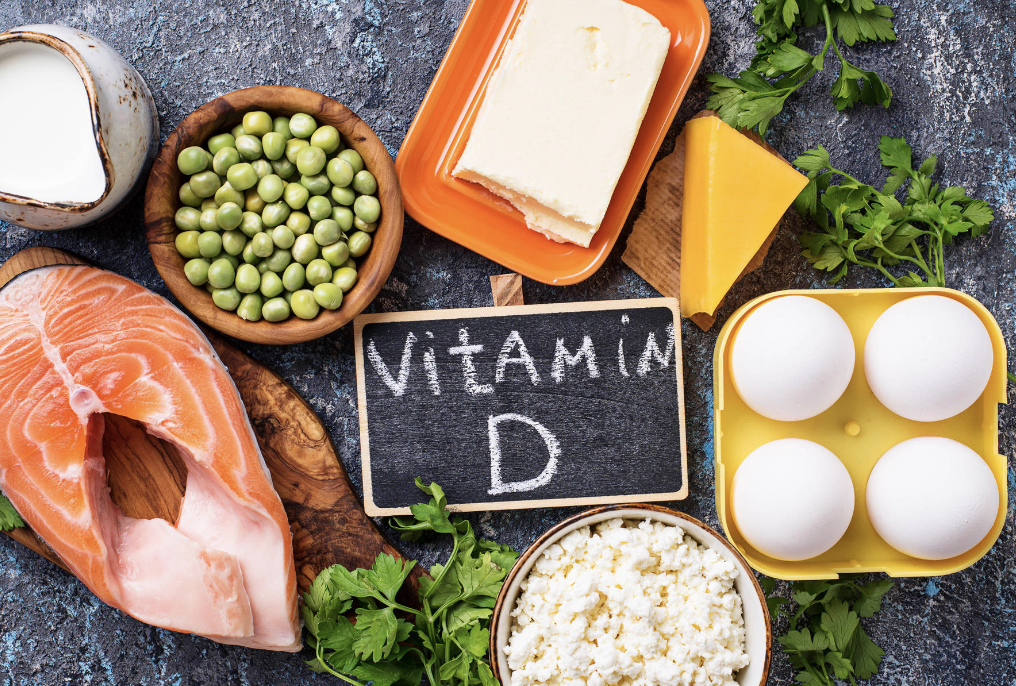
Vitamin D3 might be the most talked-about supplement of winter. So what does it actually do? We went through the research to find the benefits with the best evidence behind them.
Bones and calcium
This one is well established. Vitamin D3 helps your body absorb calcium from food, which is why it matters for bones and teeth. Severe deficiency can lead to soft, weak bones: rickets in children and osteomalacia in adults. Keeping your level in a healthy range may support your bones, especially through our low-sun months.
Immune support: fewer respiratory infections
In 2017, researchers pooled data from 25 randomized trials in the BMJ, covering about 11,000 people from infants to age 95. The trials used vitamin D3 or D2.
- Overall, people taking vitamin D had 12% lower odds of getting at least one acute respiratory infection.
- With daily or weekly doses, the benefit grew to 19% lower odds. Big, occasional doses didn't show the same effect.
- People who started out very low (below 25 nmol/L) benefited most, with about 70% lower odds.
- Vitamin D did not increase serious side effects.
The takeaway: vitamin D3 may support immune health, and it seems to matter most if your level is low to begin with.
Autoimmune disease: fewer new diagnoses
In 2022, the VITAL trial reported on autoimmune disease. VITAL followed about 25,900 US adults (men 50 and over, women 55 and over). Half took 2,000 IU of vitamin D3 a day, and half took a placebo, for a median of 5.3 years.
The vitamin D group had 22% fewer new diagnoses of autoimmune disease, including rheumatoid arthritis, polymyalgia rheumatica, autoimmune thyroid disease and psoriasis. When the first two years were set aside, the difference grew to 39%. It's one of the first large randomized trials to test this question, and it's a good reason to take steady daily use seriously. Researchers say it needs to be repeated in other groups.
Cancer
Pooled trials have found about 13% fewer cancer deaths with vitamin D, though not fewer diagnoses. The evidence is still developing, and we dig into it in our article on vitamin D3 and cancer.
So where does K2 fit in?
Vitamin K2 helps activate proteins that guide calcium to where it's needed, such as your bones and teeth. Researchers are also interested in whether it helps keep calcium out of soft tissue like artery walls.
The thinking goes like this: if D3 helps you absorb more calcium, K2 helps direct it to the right place. It's a tidy idea, and the biology is sound. But the evidence for the pair together is thinner and more mixed than the evidence for D3 on its own. Taken as part of a routine that includes good nutrition, strength training and enough protein, the pair may support bone health.
There are two main types of vitamin K in food. K1 is in leafy greens like kale and spinach. K2 is in fermented foods such as natto, some cheeses and egg yolks. Supplements usually list K2 as MK-4 or MK-7.
Who needs to check first
- Anyone taking warfarin (Coumadin). Vitamin K can interfere with how it works. Don't start K2 without your prescriber's approval.
- Anyone on other blood thinners or heart medications. Ask your pharmacist.
- Anyone with a history of kidney stones or high blood calcium. High-dose vitamin D can raise calcium.
- Pregnant or breastfeeding people. Check with your practitioner about the right dose.
Getting the most out of it
Both vitamins dissolve in fat, so take them with a meal that has some. Health Canada's upper limit for vitamin D is 4,000 IU a day from all sources, so check your D3 dose, and ideally your blood level, before adding more.
On the label, look for an eight-digit NPN (Natural Product Number), which means Health Canada has licensed the product. It should list the D3 amount in IU, the form of K2 (MK-7 or MK-4) and its amount in micrograms.
Want help choosing a vitamin D and K2 plan that fits your health and your medications? Book an appointment
Quick answers
Does vitamin D3 help prevent colds? In pooled trials, daily or weekly doses were linked to fewer respiratory infections, with the biggest benefit in people who were very low.
Do I need K2 if I take vitamin D? Not necessarily. It depends on your diet, health and medications. It's a good question for your practitioner.
Can I take D3 and K2 with a blood thinner? Only with your prescriber's approval. Vitamin K affects blood clotting.
When should I take them? With a meal that contains fat. Many people find the morning easiest to remember.
Sources: Martineau AR, Jolliffe DA, Hooper RL, et al. BMJ. 2017;356:i6583. PMID 28202713. Martineau AR, et al. Health Technol Assess. 2019;23(2):1-44. PMID 30675873. Hahn J, et al. BMJ. 2022;376:e066452.
This article is for educational purposes only and is not medical advice. Natural health products aren't right for everyone. Talk to your healthcare practitioner before starting any new supplement.