Most people think of gut health in terms of bloating, digestion, and immunity. Fewer know that your gut bacteria actively regulate your circulating estrogen levels, and that this relationship may be one of the most important and underexplored factors in hormone-related breast cancer risk.
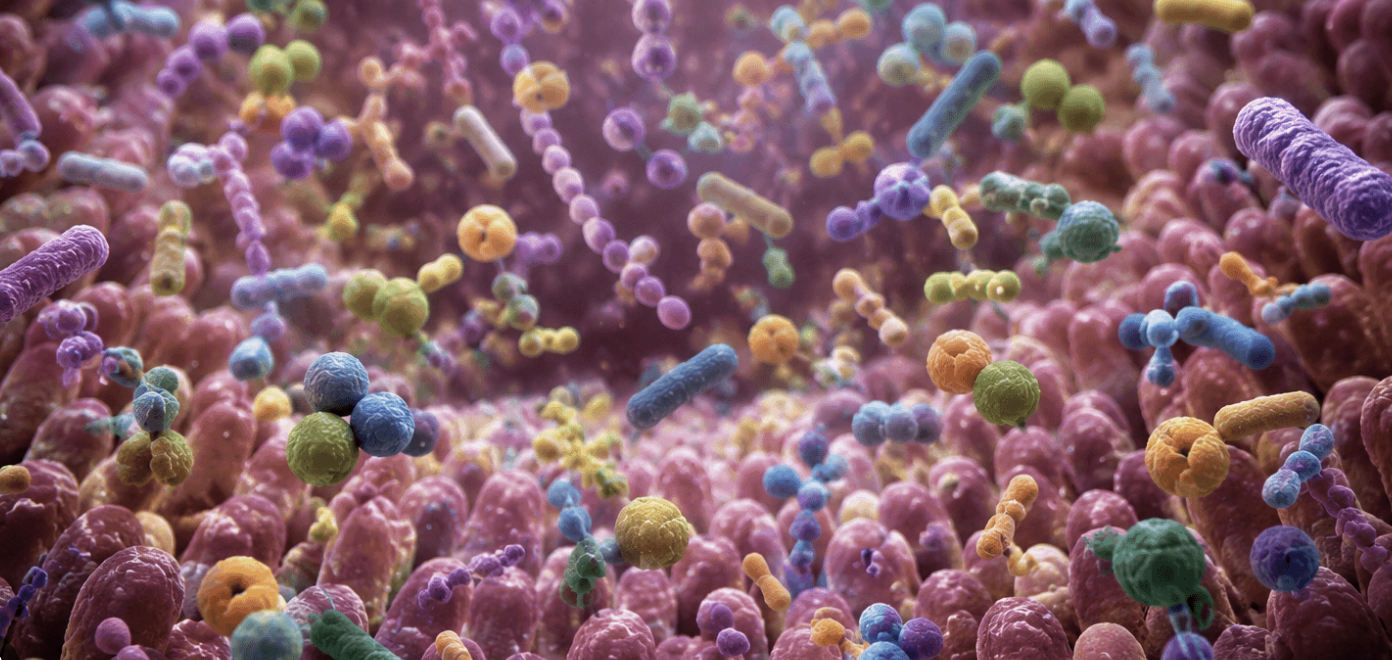
The gut microbiome contains a specialized community of bacteria with estrogen-related functions that researchers have named the estrobolome.
How It Works
Estrogen is processed by the liver, conjugated (deactivated), and sent to the gut for excretion. Here's where the microbiome enters the picture: certain gut bacteria produce an enzyme called beta-glucuronidase that deconjugates estrogen, essentially reactivating it and allowing it to be reabsorbed into circulation rather than excreted.
The gut microbiome can be understood as a bioreactor, taking conjugated estrogens and phytoestrogens as inputs and transforming them into estrogen forms that influence breast cancer risk. External factors such as nutrition, physical activity, and obesity can alter microbiome composition and potentially shift its functions toward greater estrogen recycling — increasing breast cancer risk.
When microbial diversity declines, beta-glucuronidase activity can drop or shift unpredictably, disrupting the balance between conjugated (inactive) and unconjugated (active) estrogen which may, in turn, promote hormone-driven tumor growth in estrogen receptor-positive breast cancers.
What the Research Shows
A 2026 PubMed review identified four major pathways through which gut microbiota influence breast cancer development and treatment outcomes: immune modulation, estrobolome-mediated estrogen recycling, chronic inflammatory signaling, and microbial metabolite-driven epigenetic and metabolic regulation.
Recent studies reveal that microbial dysbiosis in the gut can drive oncogenesis through mechanisms including immune modulation, estrogen metabolism, and inflammation. Specific microbial taxa including Bacillus, Staphylococcus, and Escherichia coli are enriched in breast cancer patients, whereas beneficial species like Lactobacillus and Bifidobacterium are diminished.
A 2025 prospective case-control study in the Journal of Cancer Research and Clinical Oncology found that postmenopausal women with newly diagnosed hormone receptor-positive breast cancer had measurably different gut microbiome composition compared to healthy controls, with altered estrobolome function and higher circulating estrogen levels.
Active Clinical Trials
This science has moved beyond theory into clinical investigation. Two trials now actively studying the microbiome-breast cancer connection:
TIGER-BC (NCT07253168, Fondazione Policlinico Gemelli, Italy): A prospective discovery study integrating tumor tissue, gut microbiome, and estrobolome analyses in breast cancer patients, stratified by molecular subtype. Expected to complete 2028.
CICLIBIOME (NCT06171360, Université Catholique de Louvain): Studying the gut and tumor microbiome in hormone receptor-positive, HER2-negative breast cancer patients receiving CDK4/6 inhibitors directly connecting microbiome composition to treatment response.
What You Can Do
The estrobolome is modifiable through the same levers that support gut health broadly: dietary fiber, fermented foods, reduced ultra-processed food consumption, and targeted probiotic support.
The bacteria most associated with healthy estrogen metabolism include Lactobacillus and Bifidobacterium species — both of which are depleted in breast cancer patients and both of which respond to prebiotic fiber and fermented food intake. Reducing alcohol consumption is also directly relevant: alcohol disrupts gut microbial balance and is one of the few modifiable risk factors for breast cancer with consistent epidemiological evidence.
This isn't a replacement for screening, medical care, or the treatment conversations covered in this month's main article. It is, however, a meaningful and actionable part of the breast cancer prevention picture that most women, and many physicians, have never heard of.
References: Larnder et al. "The estrobolome: Estrogen-metabolizing pathways of the gut microbiome and their relation to breast cancer." International Journal of Cancer, 2025. [DOI: 10.1002/ijc.35427]; Taki AG, et al. "Unraveling the microbiome's role in breast cancer progression and treatment response." Current Problems in Cancer, Feb 2026 [PMID: 41352125]; Wali AF, et al. "Microbiome-Driven Mechanisms in Breast Cancer." Biomed Res Int, 2026 [PMC13458463]; NCT07253168 (TIGER-BC); NCT06171360 (CICLIBIOME)